
Immediate dentures
Made before extractions and fitted on the day the teeth are removed. As the gums and bone heal, the fit changes, so follow-up adjustment and usually a reline are expected.
Full dentures
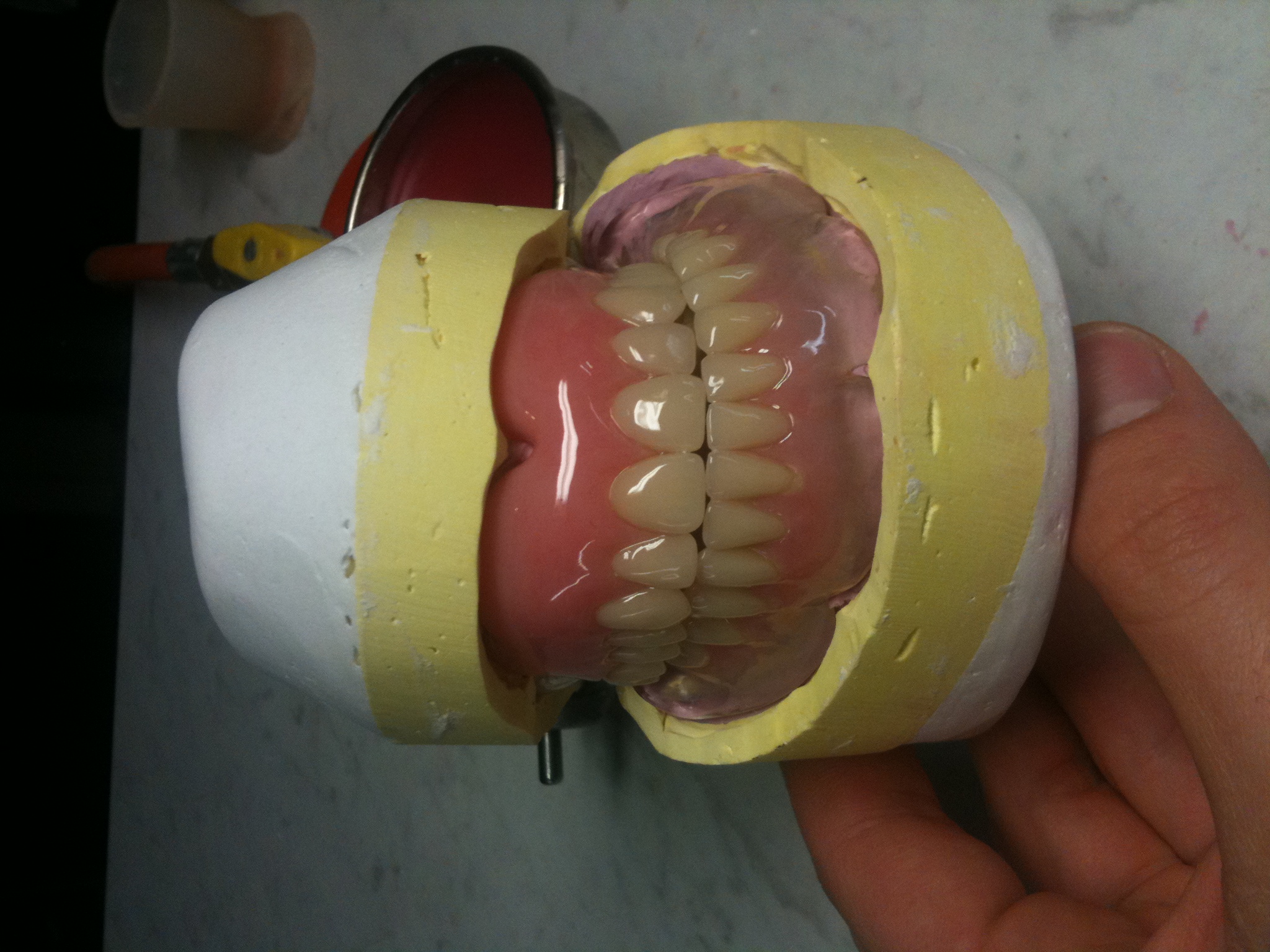
A full denture replaces all the teeth in the upper jaw, lower jaw or both. Mobile appointments are available across Sydney's North Shore, and each denture is made in our own laboratory by Lev Terterian — the dental prosthetist who assesses, designs and fits it.
The main decision
If teeth still need to be removed, there are two common paths. The right choice depends on your mouth, timing and budget.
Made before extractions and fitted on the day the teeth are removed. As the gums and bone heal, the fit changes, so follow-up adjustment and usually a reline are expected.
Made once the extraction sites have healed. You wait longer before the denture is fitted, but the impressions reflect the more settled shape of the gums.
There is no universal "best" option. At the first visit, we will explain which path may be practical for your teeth and what follow-up work is likely.
Full dentures may be considered when all teeth in one or both jaws are already missing or are planned for removal. Where some healthy teeth can be retained, a partial denture may also be discussed. The appropriate option depends on an individual assessment.
Your appointments
A full denture is built in stages so the fit, bite and appearance can be checked before it is finished. The number and timing of appointments vary according to the condition of the mouth, whether teeth are being removed and whether an immediate or conventional denture is planned.
Settling in
New dentures can initially affect speech, chewing and the way the mouth feels. Start with softer food cut into small pieces and chew on both sides to keep the denture balanced. Reading aloud can help speech adapt.
Rubbing or sore spots should be adjusted. Call rather than continuing to wear a denture that is injuring the gum.
Never reshape a denture yourself. Filing or heating acrylic can change the bite or permanently damage the fit.
Mobile denture care
Northside Denture Clinic provides mobile full denture appointments by arrangement across Sydney's North Shore. Home visits can be useful for people who find travel difficult, live in supported accommodation or prefer to be seen in familiar surroundings.
Availability depends on location and the type of appointment required. See how our home visit service works or contact us to discuss your suburb and needs.
Common questions
Many dentures remain serviceable for years, but the mouth continues to change underneath them. Have the fit reviewed periodically, particularly if the denture rocks, traps food or needs increasing adhesive.
The shade, size and arrangement are reviewed with you at the wax try-in. Small natural variations often look more convincing than a perfectly uniform row.
Remove them overnight unless your practitioner has given a specific short-term instruction otherwise. Clean them and store them in water or the recommended soaking solution; never use hot water because it can warp acrylic.
No referral is needed to see a dental prosthetist. If extractions or another dental procedure are required first, we will explain that and can coordinate with your dentist.
Full dentures are usually completed over several appointments so impressions, jaw position, tooth appearance and fit can be checked. The exact number varies, particularly when immediate dentures or extractions are involved.
Call to discuss your current dentures or teeth, mobility, location and the likely next steps for an assessment.